

Economic data is crucial because it informs decisions about policy, business, and investing.
Unfortunately, much of the economic data we get regularly is based on surveys, which means it comes with a margin of error. And even after it’s published, the data is often revised as more information comes in.
For example, the July new home sales report showed sales fell 10.5% during the month. But the Census Bureau also noted that the margin of error at the 90% confidence interval was ±14.0%, which means sales could have actually climbed by 3.5%.
With the July jobs report, the Bureau of Labor Statistics revised the tally for May and June lower by 103,000 jobs.
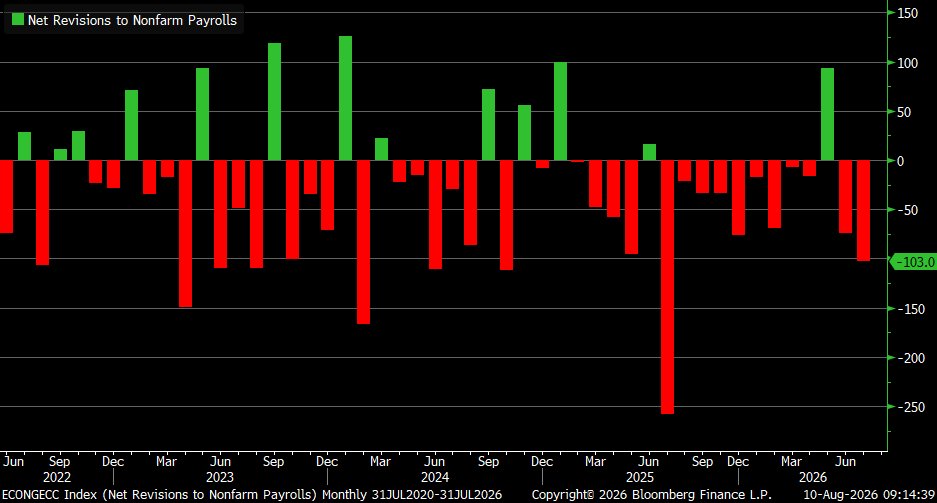
These revisions usually aren’t a big deal. But growing concerns about data quality and the politicization of revisions have made this wonky topic something that more people are thinking about.
In particular, downward revisions to economic activity metrics seem to get a lot of attention.
On that, I have two thoughts for stock market investors.